

Z-Flipons: How Specific DNA Regions Help Regulate Gene Function
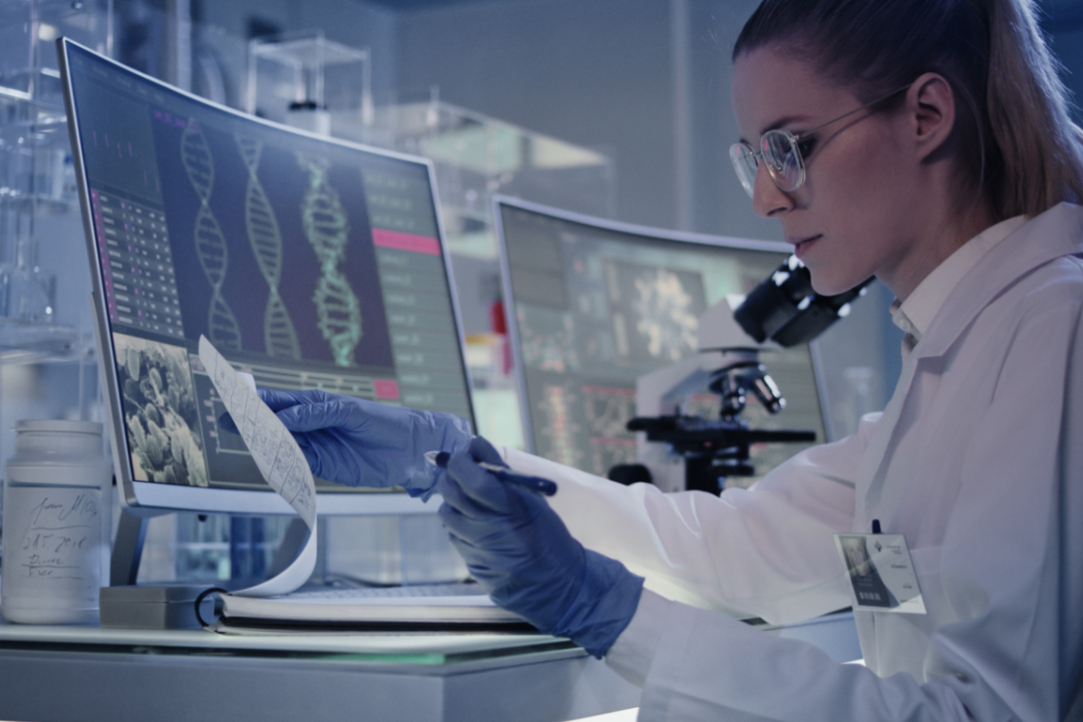
Researchers at HSE University and InsideOutBio have applied machine learning to identify the location and functions of mirror-twisted DNA structures, known as Z-flipons, in human and mouse genomes. The scientists discovered which Z-DNA regions were conserved in both species throughout evolution and demonstrated for the first time that Z-DNA accelerates the process of creating RNA copies of genes. The findings will contribute to the development of new treatments for genetic diseases. The study has been published in Scientific Reports.
The structure of a DNA molecule—a double helix resembling a spiral staircase—might be familiar to many from their high school days. The 'steps' of this staircase are made up of pairs of nitrogenous bases, while the 'railings' consist of alternating chains of sugar and phosphate groups. Typically, the DNA strand twists to the right, but certain regions can temporarily twist to the left, playing a role in regulating gene activity. Due to their resemblance to the letter Z, these regions are referred to as Z-flipons.
A team of researchers from the International Laboratory of Bioinformatics at the AI and Digital Science Institute of the HSE Faculty of Computer Science and InsideOutBio analysed the human and mouse genomes to predict the locations of Z-flipons and determine their functions. To achieve this, the scientists examined whether the Z-DNA segment is conserved across different species throughout evolution; if the segment remains unchanged, it indicates its importance to the organism's function and survival.
The researchers used the previously developed DeepZ deep learning system that considered not only information from the linear DNA sequence but also data from tens of thousands of Omix experiments. This included, for example, information about epigenetic tags—chemical markers on DNA or proteins that help regulate gene activity without altering the DNA structure itself. Additionally, the scientists incorporated data on the transition energy required for a DNA region to alter its structure. Two machine learning models were developed using this data: one for humans and one for mice. Afterward, the trained model 'scanned' the entire genome, identifying areas with a high probability of Z-DNA regions. The model predictions were compared, and then the regions conserved in both the human and mouse genomes were identified.
The researchers were able to structure data on the locations of Z-flipons in the mouse and human genomes and identify the genes in which they are found. The scientists have demonstrated that Z-flipons are conserved elements which are shared by different organisms and persist throughout evolution. By applying clustering, the researchers discovered that Z-flipons are grouped by function: some are involved in transcription regulation, while others play a role in the formation of chromatin—the 'packaging' of DNA within the cell. This confirms that Omix features do indeed determine the functional class of Z-flipons, which is crucial for understanding their role.
Also, for the first time, the scientists discovered and statistically demonstrated that Z-flipons accelerate the initiation of transcription, the process of creating RNA copies of genes. This feature enables cells to adapt more quickly to changes, which is particularly important for genes involved in the development of the nervous system and in other critical processes.

'To create a copy of a gene, RNA polymerase must bind to a specific DNA region and produce an RNA copy. If many copies are needed, multiple "photocopying machines" attach to the region simultaneously. However, the mechanism is slightly different: instead of repeatedly copying one page, there is a single "book"—a DNA sequence—to be copied. Small "photocopying machines" are deployed along the "book," each moving along the DNA and creating a copy. To produce more copies, it is essential for each new "copying machine" to attach immediately after the previous one finishes its work. The frequency at which new copies are initiated is called the rate of transcription initiation,' explains Maria Poptsova, co-author of the paper and Head of the International Laboratory of Bioinformatics of the HSE Faculty of Computer Science.
The team at the International Laboratory of Bioinformatics has developed a website that hosts machine learning-based algorithms for data analysis, as well as whole-genome annotations—detailed information about the functional elements of the genome.
See also:

Artificial Intelligence Transforms Employment in Russian Companies
Russian enterprises rank among the world’s top ten leaders in AI adoption. In 2023, nearly one-third of domestic companies reported using artificial intelligence. According to a new study by Larisa Smirnykh, Professor at the HSE Faculty of Economic Sciences, the impact of digitalisation on employment is uneven: while the introduction of AI in small and large enterprises led to a reduction in the number of employees, in medium-sized companies, on the contrary, it contributed to job growth. The article has been published in Voprosy Ekonomiki.
Lost Signal: How Solar Activity Silenced Earth's Radiation
Researchers from HSE University and the Space Research Institute of the Russian Academy of Sciences analysed seven years of data from the ERG (Arase) satellite and, for the first time, provided a detailed description of a new type of radio emission from near-Earth space—the hectometric continuum, first discovered in 2017. The researchers found that this radiation appears a few hours after sunset and disappears one to three hours after sunrise. It was most frequently observed during the summer months and less often in spring and autumn. However, by mid-2022, when the Sun entered a phase of increased activity, the radiation had completely vanished—though the scientists believe the signal may reappear in the future. The study has been published in the Journal of Geophysical Research: Space Physics.
Banking Crises Drive Biodiversity Loss
Economists from HSE University, MGIMO University, and Bocconi University have found that financial crises have a significant negative impact on biodiversity and the environment. This relationship appears to be bi-directional: as global biodiversity declines, the likelihood of new crises increases. The study examines the status of populations encompassing thousands of species worldwide over the past 50 years. The article has been published in Economics Letters, an international journal.
Scientists Discover That the Brain Responds to Others’ Actions as if They Were Its Own
When we watch someone move their finger, our brain doesn’t remain passive. Research conducted by scientists from HSE University and Lausanne University Hospital shows that observing movement activates the motor cortex as if we were performing the action ourselves—while simultaneously ‘silencing’ unnecessary muscles. The findings were published in Scientific Reports.
Russian Scientists Investigate Age-Related Differences in Brain Damage Volume Following Childhood Stroke
A team of Russian scientists and clinicians, including Sofya Kulikova from HSE University in Perm, compared the extent and characteristics of brain damage in children who experienced a stroke either within the first four weeks of life or before the age of two. The researchers found that the younger the child, the more extensive the brain damage—particularly in the frontal and parietal lobes, which are responsible for movement, language, and thinking. The study, published in Neuroscience and Behavioral Physiology, provides insights into how age can influence the nature and extent of brain lesions and lays the groundwork for developing personalised rehabilitation programmes for children who experience a stroke early in life.
Scientists Test Asymmetry Between Matter and Antimatter
An international team, including scientists from HSE University, has collected and analysed data from dozens of experiments on charm mixing—the process in which an unstable charm meson oscillates between its particle and antiparticle states. These oscillations were observed only four times per thousand decays, fully consistent with the predictions of the Standard Model. This indicates that no signs of new physics have yet been detected in these processes, and if unknown particles do exist, they are likely too heavy to be observed with current equipment. The paper has been published in Physical Review D.
HSE Scientists Reveal What Drives Public Trust in Science
Researchers at HSE ISSEK have analysed the level of trust in scientific knowledge in Russian society and the factors shaping attitudes and perceptions. It was found that trust in science depends more on everyday experience, social expectations, and the perceived promises of science than on objective knowledge. The article has been published in Universe of Russia.
Scientists Uncover Why Consumers Are Reluctant to Pay for Sugar-Free Products
Researchers at the HSE Institute for Cognitive Neuroscience have investigated how 'sugar-free' labelling affects consumers’ willingness to pay for such products. It was found that the label has little impact on the products’ appeal due to a trade-off between sweetness and healthiness: on the one hand, the label can deter consumers by implying an inferior taste, while on the other, it signals potential health benefits. The study findings have been published in Frontiers in Nutrition.
HSE Psycholinguists Launch Digital Tool to Spot Dyslexia in Children
Specialists from HSE University's Centre for Language and Brain have introduced LexiMetr, a new digital tool for diagnosing dyslexia in primary school students. This is the first standardised application in Russia that enables fast and reliable assessment of children’s reading skills to identify dyslexia or the risk of developing it. The application is available on the RuStore platform and runs on Android tablets.
Physicists Propose New Mechanism to Enhance Superconductivity with 'Quantum Glue'
A team of researchers, including scientists from HSE MIEM, has demonstrated that defects in a material can enhance, rather than hinder, superconductivity. This occurs through interaction between defective and cleaner regions, which creates a 'quantum glue'—a uniform component that binds distinct superconducting regions into a single network. Calculations confirm that this mechanism could aid in developing superconductors that operate at higher temperatures. The study has been published in Communications Physics.